.svg)



Key Points
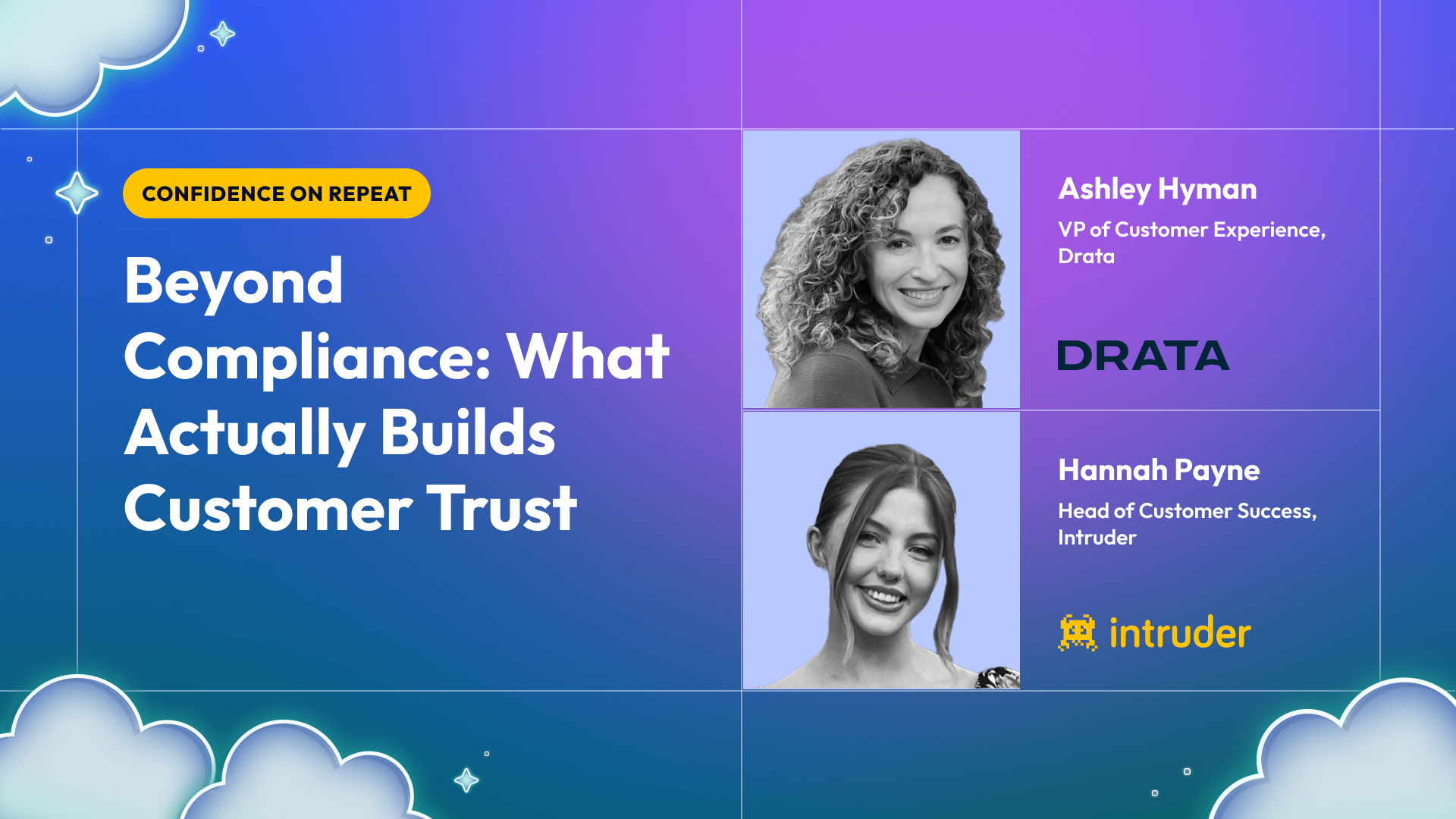
Beyond Compliance: What Actually Builds Customer Trust
For many teams, compliance follows a familiar pattern. Pick a framework. Prep for the audit. Share the report.
That work matters, but it’s not what buyers care about most.
Threats don’t follow audit cycles, and customers don’t judge security by frameworks alone. They want confidence backed by ongoing proof.
Frameworks set expectations. Trust comes from showing controls hold up over time, not just during an audit.
Frameworks Define Structure. Trust Comes From Proof Over Time.
Compliance frameworks set expectations by defining required controls, evidence, and a shared language for audits and security reviews. But they are still models. They describe what “good” looks like, not whether safeguards continue operating after an audit ends.
Many buyers understand this. When reviewing a SOC 2 report, they look beyond its existence. They pay close attention to the auditor, scope, exceptions, and management responses to determine whether the report reflects an actively managed program or a moment in time.
Frameworks establish the baseline. Ongoing visibility is what makes it credible.
Where Trust Breaks: The Point-in-Time Gap
Point-in-time audits create a built-in trust gap. The moment a report is issued, it starts to age.
Environments don’t stand still. Systems change, access shifts, vendors are added, and vulnerabilities emerge on a rolling timeline. A framework can show that a process existed. It can’t prove that it’s still working today.
This is where “we’re compliant” turns into “can you prove it?” Buyers want practical proof: continuously monitored controls, current evidence, and clear ownership when something fails.
Trust holds when risk is actively managed, not just recorded.
Why Continuous Compliance Changes the Conversation
Continuous compliance shifts compliance from an audit-season task to an operating model. Instead of relying on snapshots, teams maintain ongoing visibility into control health and evidence as their environment changes.
Controls are monitored continuously, evidence stays current, and issues are surfaced and addressed early rather than discovered during an audit or customer review.
For buyers, this changes the conversation. It’s not about having a SOC 2 report. It’s about showing how those controls stay effective day to day. That ongoing proof is what turns compliance into confidence.
How Buyers Actually Evaluate Trust
During security reviews, buyers often dig deeper into areas such as:
- Scope — Which systems, services, and data are included
- Control coverage — How sensitive data is protected
- Qualifications and exceptions — Whether any findings affect reliance
- Change management — How changes are handled outside the audit window
Because SOC 2 is a point-in-time attestation, these follow-up questions are expected. Buyers are assessing risk as it exists today — not just as it appeared during testing.
A Practical Example: Vulnerability Evidence Without the Scramble
Vulnerability management is a clear place where trust breaks down when it’s treated as a one-off. Buyers know vulnerabilities change fast, and a static report offers little reassurance.
That’s where automation matters. With continuous scanning and evidence flowing directly into Drata, proof stays current without manual downloads, uploads, or last-minute requests.
The result is simple. Evidence is ready when asked, reviews move faster, and teams spend less time proving work happened and more time reducing risk.
That’s not just cleaner compliance. It’s clearer assurance.
How to Start (Without Boiling the Ocean)
You don’t need to automate everything on day one to earn customer trust. Start where scrutiny is highest.
Get the basics right: Focus on the controls customers ask about early, like security policies, access controls, password management, and vulnerability management. These map directly to compliance requirements and scale without rework.
Keep it on, not just documented: Point-in-time setups aren’t enough. Add continuous monitoring to the controls that matter most so issues don’t go unnoticed. When something breaks, it should be visible, owned, and tracked through remediation.
Make trust easy to prove: Trust grows when answers are fast and consistent. Share current, always-ready evidence instead of one-off explanations or decks. Over time, this becomes part of how customers experience your security and your product.
Conclusion + Next Steps
Customer trust isn’t built by passing audits. It’s built by proving, every day, that security and compliance are active and reliable. Continuous signals and automated evidence turn compliance into a real trust signal.
Buyers expect more than point-in-time reports. They want confidence that risk is managed as it emerges, without last-minute scrambles for proof.
That’s where Drata and Intruder come together. Automated vulnerability evidence flows directly into your compliance program, reducing manual work while strengthening the proof you can share.
Ready to move beyond checkbox compliance? Get 25% off your first Drata contract and launch a Trust Center in one click. And you’ll get access to 10 AI assisted security questionnaires to speed up reviews and win deals faster.
The teams that earn trust aren’t just compliant. They prove it continuously.

Vulnerabulletin