.svg)



Key Points
Pentesting has always had a timing problem. Teams ship code multiple times a week, but a pentest still happens once a year, so most new code goes live without that depth of testing. And it's built around the compliance calendar, not your actual threat environment. A pass proves you were tested, not that you're continuously secure.
None of this is new. What's new is how fast things are moving. AI generated code is enabling engineering teams to ship more often, while AI is simultaenously enabling attackers by making it easier to find and exploit weaknesses. More to deal with and less time to act means the gap between pentests is riskier than it used to be.
That's why AI web app pentesting is the only viable path forward. Continuous testing was always the solution, but cost, lead times, and expertise kept it out of reach for all but the largest enterprises. AI removes those barriers, so you can run a full web app pentest whenever you need one, at a fraction of the cost of a manual engagement, with tests starting from $4,000.
Pentesting that keeps pace
Skip the lead time and the admin
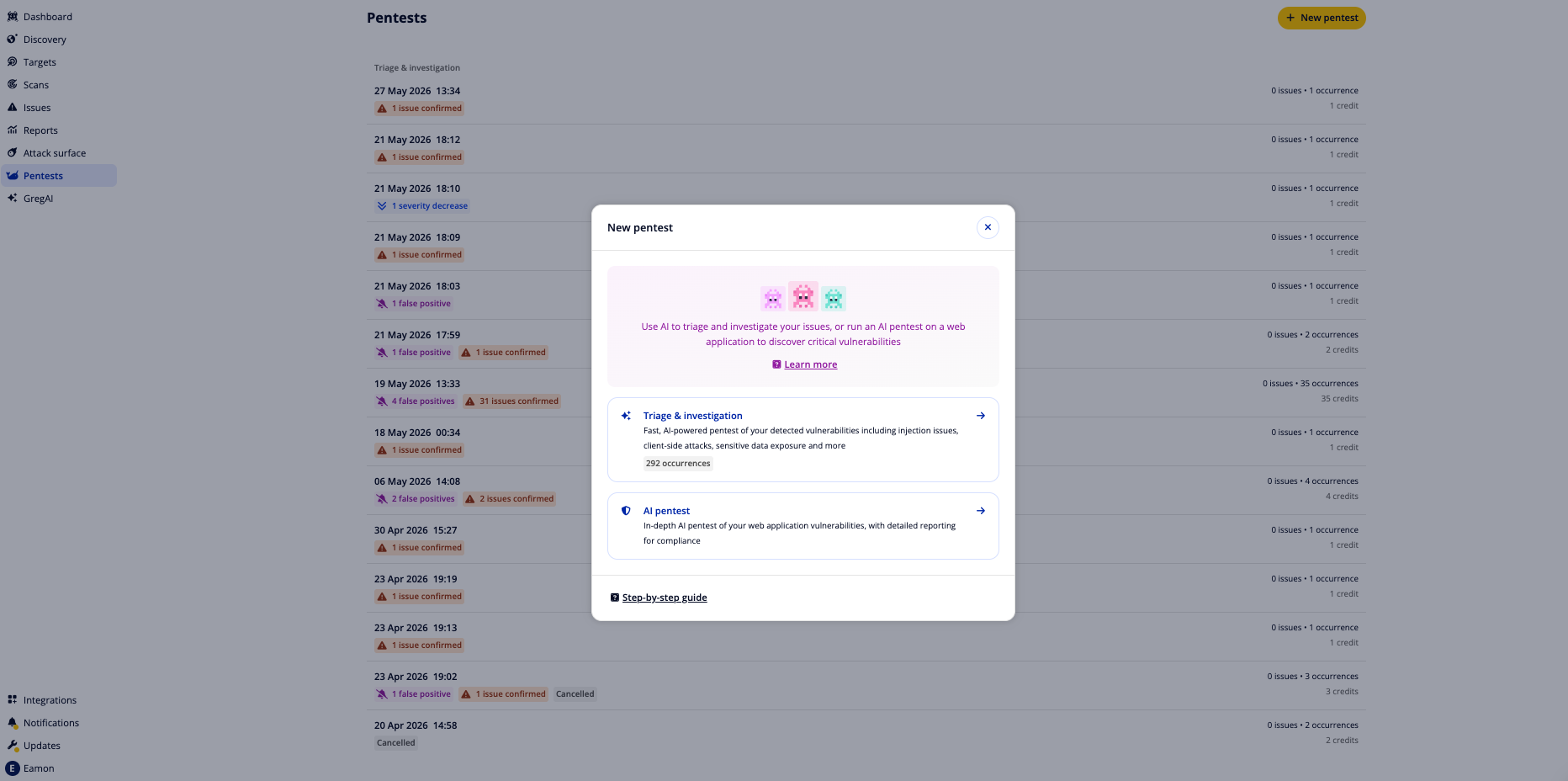
A manual pentest starts long before anyone tests anything. Procurement, scoping calls, plus lead times that can stretch eight weeks. AI web app pentesting drops the wait and the paperwork. Integrate your GitHub or GitLab code repository, scope the test by providing entry points and credentials, and launch when it suits you.
Keep testing in step with your releases
Engineering teams ship constantly, and every deployment brings the possibility of new vulnerabilities. Instead of waiting for the next annual engagement, you can run a pentest on every significant release and get security testing that moves at the same pace as your engineers.
Make your pentest budget go further
Run several pentests a year for what a single manual engagement used to cost. When a pentest stops being a major expense, your budget stops dictating how often you test. You test when the risk profile changes, not because it's the one engagement you could stretch to this year.
Find what manual pentests miss
By ingesting your entire codebase, the agents build a deep understanding of how your application works, faster than any human tester could. That understanding lets them surface high-impact, exploitable weaknesses human pentesters can miss. It's already turned up broken authorization controls and payment flaws that let a user move money they shouldn't be able to, the kind of business logic issue that only surfaces once you understand how the app is built. Teams that have run best-in-class pentesting and vulnerability management programs are finding issues that have been hiding in plain sight for years. Read more about the types of issues it finds in our guide: Everything you need to know about AI web app pentesting.
Code in, report out
Connect your codebase: Link your GitHub or GitLab repo, and the agents take a white box (code-assisted) approach, testing with full knowledge of how the app is built rather than only what an outside attacker can see. Because they read the source code, they map your APIs automatically, no schema upload required.
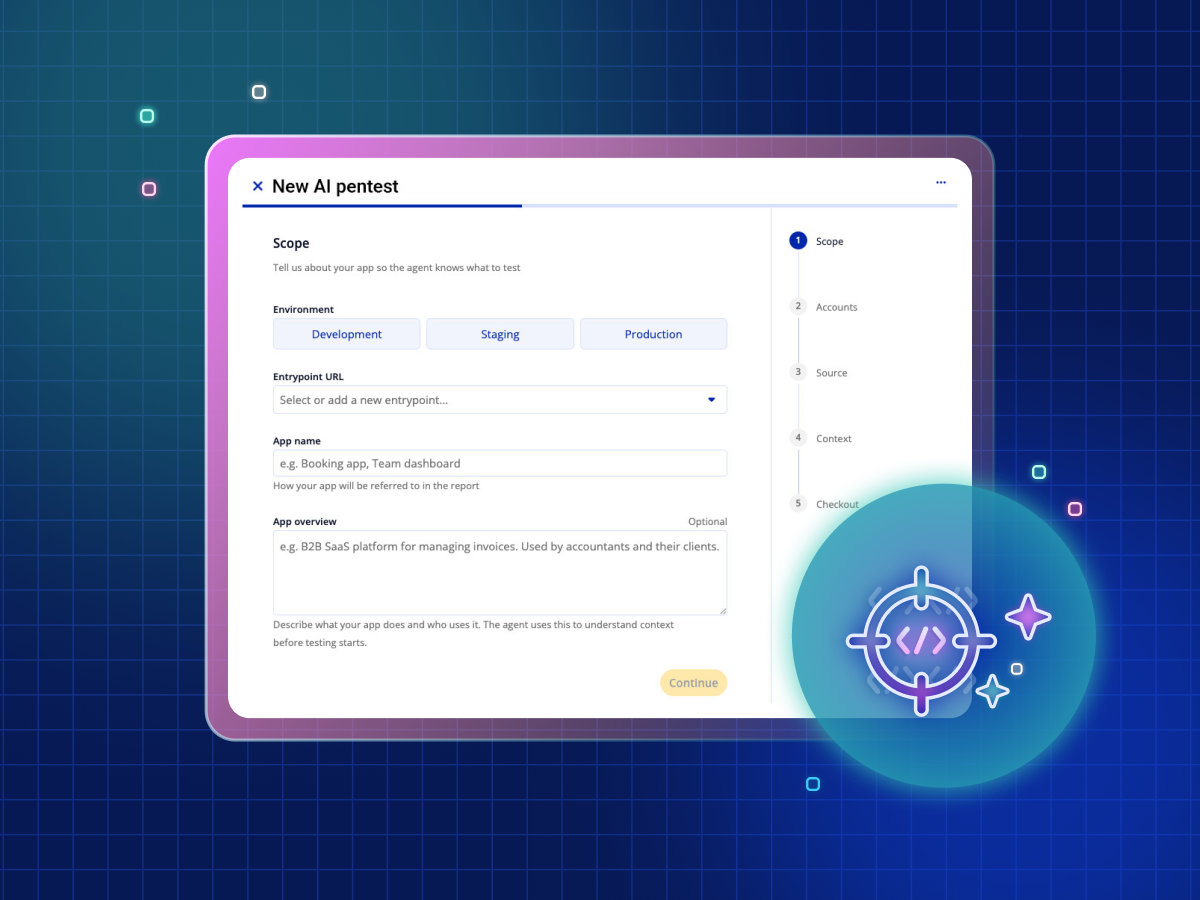
Scope and launch in minutes: Add your entry points, credentials, and any extra context, then start the test.
Get results the same day: Tests run in minutes to hours depending on the complexity of the app, so you get findings in hours, not weeks.
Full pentest report: Every test produces an executive summary, per-finding severity with impact and likelihood scoring, reproduction steps, and remediation guidance, ready to share with your team, auditors, or customers.
Our in-house CREST-certified pentesters built and trained the agents to reason through an application and adapt as they go, the way a human tester does. The agents quickly get up to speed with how your application is built by analyzing your codebase. Then they use this knowledge to go where the evidence leads instead of being constrained by a fixed checklist.
The pentest will continue to evolve
The bigger shift is moving away from the one-off engagement altogether. As AI takes on more of the testing a human used to do, and pushes the cost and lead time down with it, the old line between a broad but frequent vulnerability scan and an infrequent but deep pentest starts to fade. What emerges in the middle is continuous testing with a pentester's depth, run often enough to keep up with your release cycle. Think smaller tests that fire when something changes, like a new feature shipping or a config being updated, instead of one big engagement a year. The human doesn't drop out; their focus just shifts from running each test to overseeing testing that runs all the time.
On-demand web app pentesting is a step in that direction. Alongside the issue-level investigations we launched earlier this year, it's part of a broader move toward continuous AI pentesting and red teaming across your whole estate, from web apps to your external and internal networks.
Here's how our customer Zach Rattner, CTO and Co-Founder of Yembo, put it:
"Securing a global AI platform requires continuous defense. While Yembo continues to leverage human pentesters, annual assessments alone leave dangerous windows of exposure. Intruder's AI pentesting bridges that gap by delivering human-grade depth at machine speed to keep our platform permanently hardened."
No procurement, no scoping calls, no waiting weeks for a slot. Scope a web app pentest and launch it whenever you need one. Run your first pentest.

Vulnerabulletin


.png)