
Find the secrets other scanners miss
Most secrets detection tools only scan the surface. Intruder digs into your infrastructure, web apps, and JavaScript bundles to catch the leaked credentials they miss.

Join 3,000+ companies securing their attack surface with Intruder









Catch credentials hiding in plain sight
Intruder filters out the false positives that bury most secrets detection scanners, so you only see credentials that are actually exposed. Check your infrastructure and public-facing directories for the leaks worth acting on.

Get back the time you spend leak-hunting
Intruder runs continuous scans across your live environments, so checking for exposed credentials isn't your job anymore. That's hours back for the security work that actually needs a human.

See the secrets buried in your JavaScript
Front-end JavaScript is where the most damaging leaks tend to hide. Intruder spiders the JavaScript bundles behind your single-page applications and flags any exposed secrets.

Always-on security for your infrastructure and apps
Agentless onboarding

No agents to install. Point Intruder at your domains or IPs and it starts checking them for exposed secrets straight away, no configuration required.
Continuous scanning
Intruder checks your infrastructure, web apps, and JavaScript bundles against more than 850 token and key formats. Its Dynamic Application Security Testing (DAST) engine spiders your apps as they change.
Consolidated results
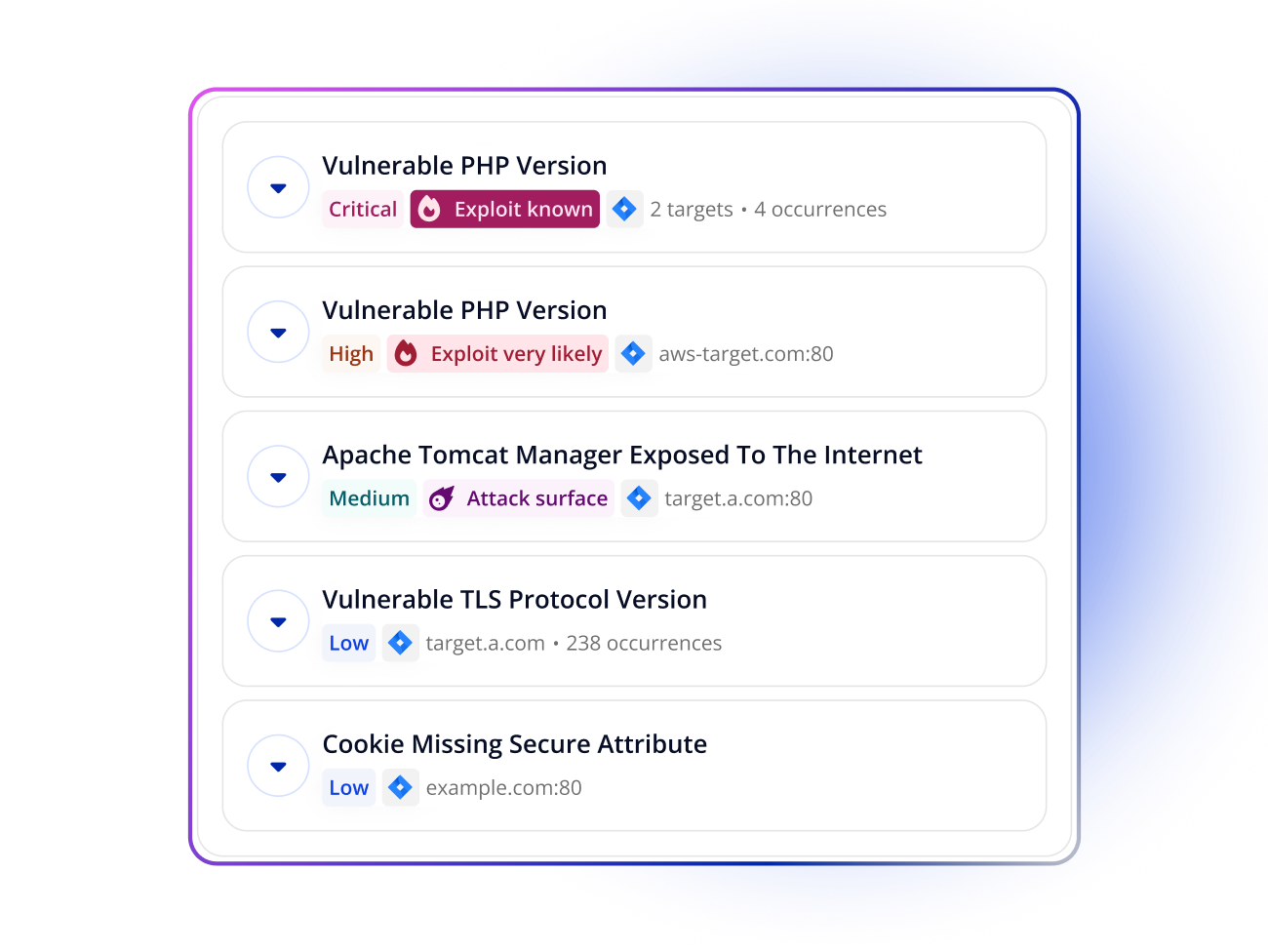
Every exposed credential shows up in one place, with what it is and where it leaked, so you can revoke and rotate it without hunting across tools.

Find what's exposed, fix what matters, and stay ahead of new threats

External Scanning
Infrastructure Security

Attack Surface Monitoring
Respond to changes

CSPM
Daily cloud config checks

Asset Discovery
Reveal unknown targets

DAST
Secure web apps

Risk Based Prioritization
No more alert fatigue

Cyber Hygiene Reporting
Demonstrate progress

Emerging Threat Detection
Check and act fast

Container Image Scanning
Automated image discovery

Secrets Detection
Prevent leaked credentials

Website Security
140k+ checks

API Security
Test your APIs

Compliance
SOC 2, ISO, HIPAA, DORA

Internal Scanning
Secure employee devices
Our customers love Intruder







One platform. Continuous security.
Intruder scans for over 850 known token and key formats across your infrastructure, web applications, and JavaScript bundles, including API keys, database credentials, cloud access tokens, and private keys. Only impactful findings are reported, so you're not buried in noise.
Code-level tools scan your repositories and git history for committed secrets. Intruder scans what's actually exposed on the live internet — credentials left in configuration files, public-facing directories, and JavaScript bundles served to anyone who visits your site. Code scanning and live scanning are complementary, but they cover different blind spots.
Intruder uses a spidering-based method to crawl single page applications and extract secrets from built JavaScript bundles. These secrets are a blind spot for traditional scanners because they only appear in the deployed bundle, not in your source code. Intruder's research across ~5 million applications found over 42,000 exposed tokens this way. These checks are available on the Enterprise plan.
Infrastructure-level secrets detection runs as part of Intruder's standard scans on all plans — if you're scanning your targets, you're already checking for exposed secrets. The advanced JavaScript bundle spidering checks are available on the Enterprise plan.