
Stop exposures becoming entry points for attackers
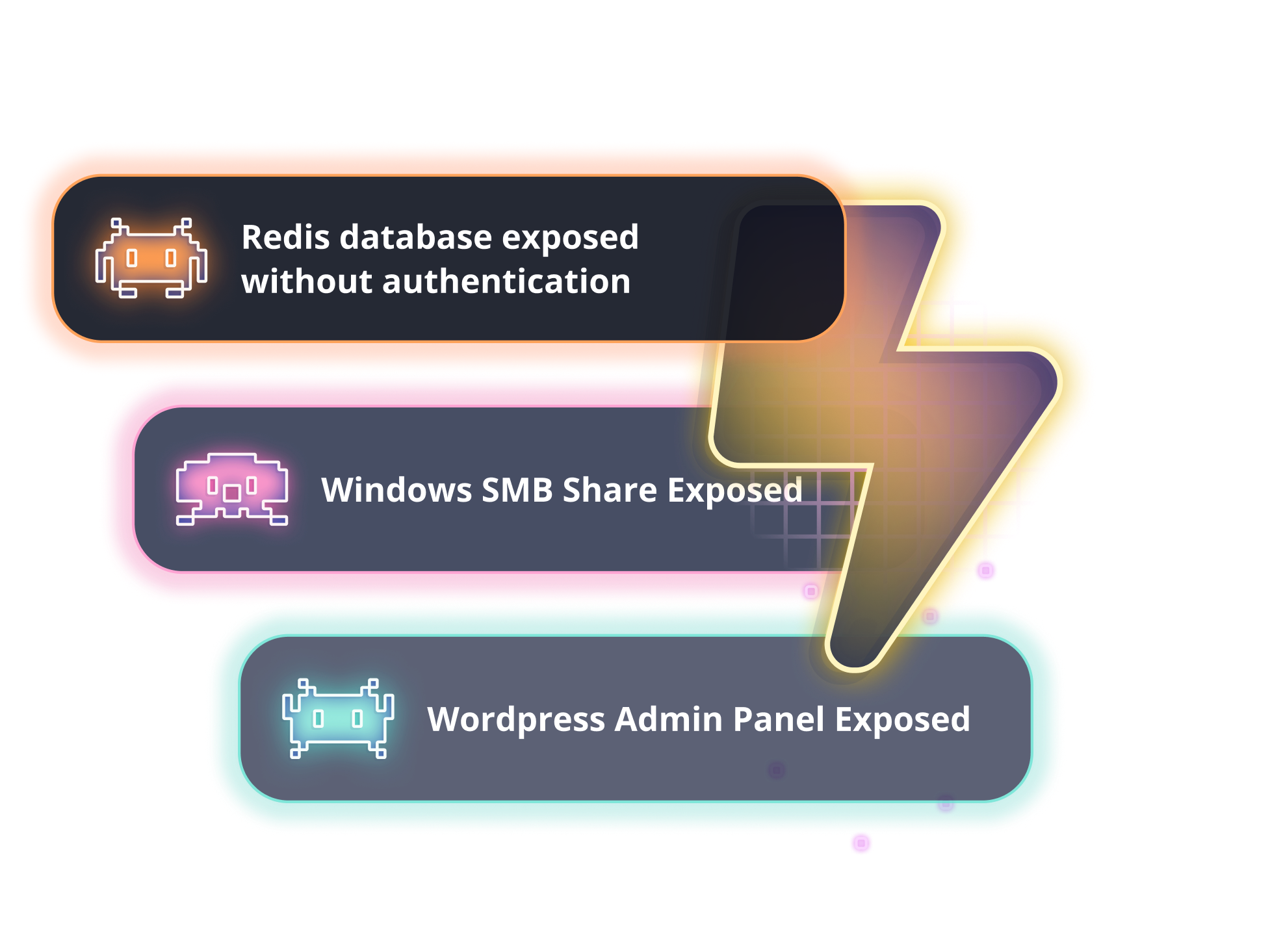
Intruder continuously monitors your external attack surface, surfacing forgotten admin panels, exposed databases, unexpected open ports, and other internet-facing exposures.
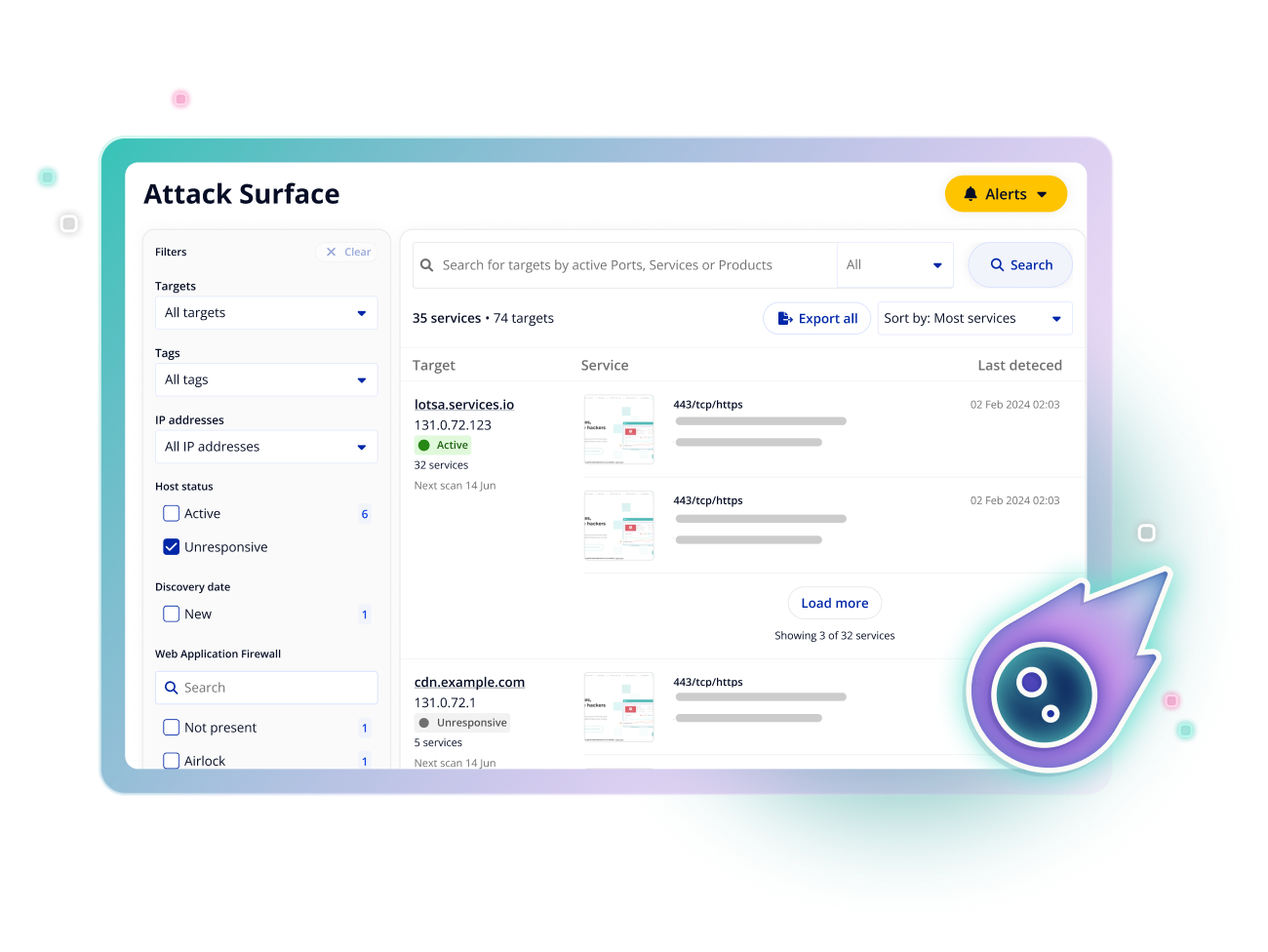
Join 3,000+ companies securing their attack surface with Intruder









Eliminate blind spots in your attack surface
Attackers don't always need a CVE, a forgotten admin panel is often enough. Intruder gives you continuous visibility of your attack surface, identifying over 1,000 types of software other solutions miss.

Stay secure as your attack surface changes
Intruder automatically scans newly discovered services for vulnerabilities, helping you uncover new risks immediately instead of waiting for your next scheduled scan.

Make sure exposures get fixed
Traditional scanners bury attack surface exposures as informational findings. Intruder prioritizes them alongside your vulnerabilities, with clear risk ratings and remediation advice.

See everything attackers see
Continuous attack surface monitoring

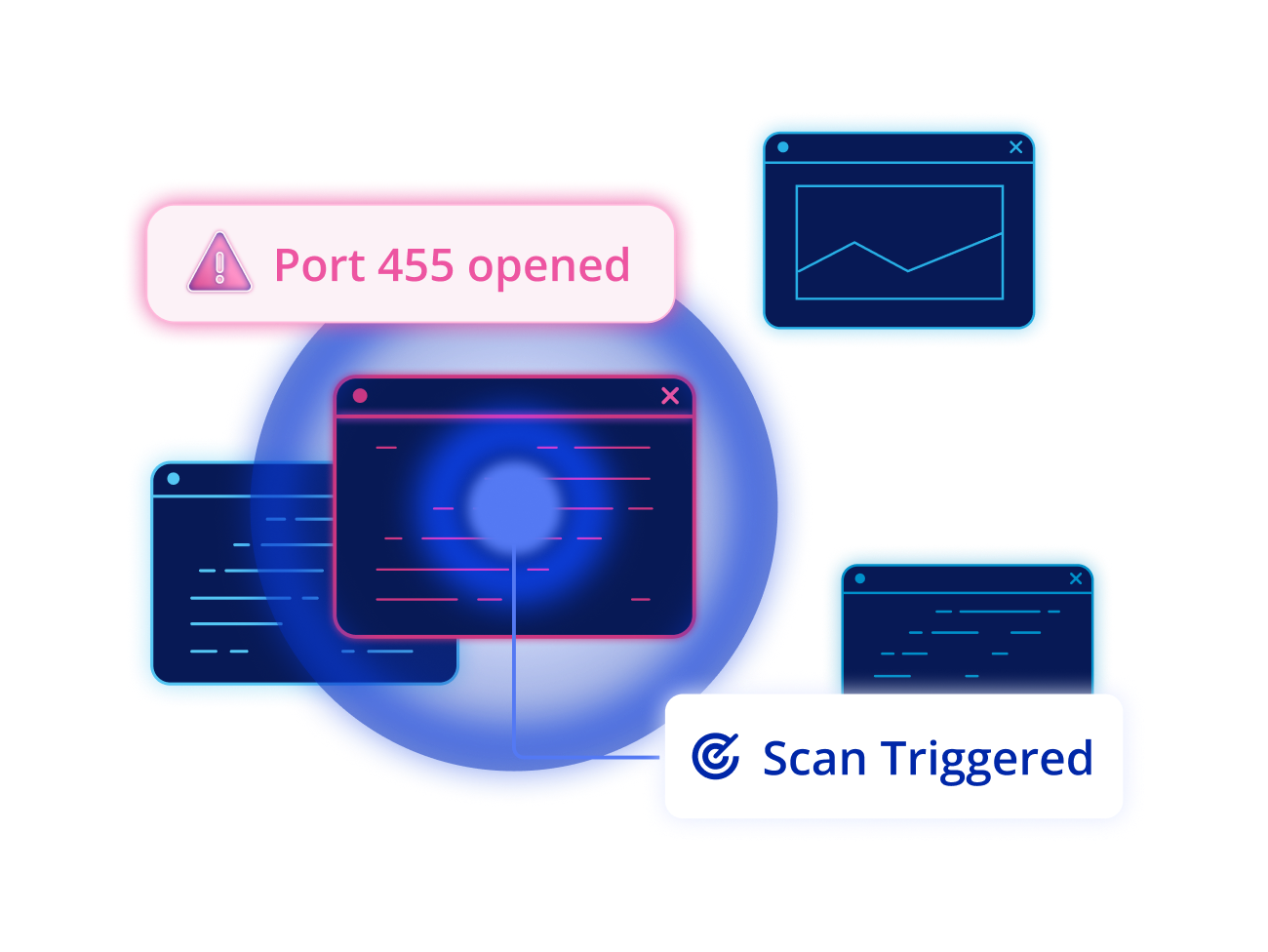
Add your targets and Intruder handles the rest, checking all 65,535 TCP ports and 100 common UDP ports. The moment a new service appears, a full vulnerability scan kicks off across all affected targets.
One clear picture of your perimeter
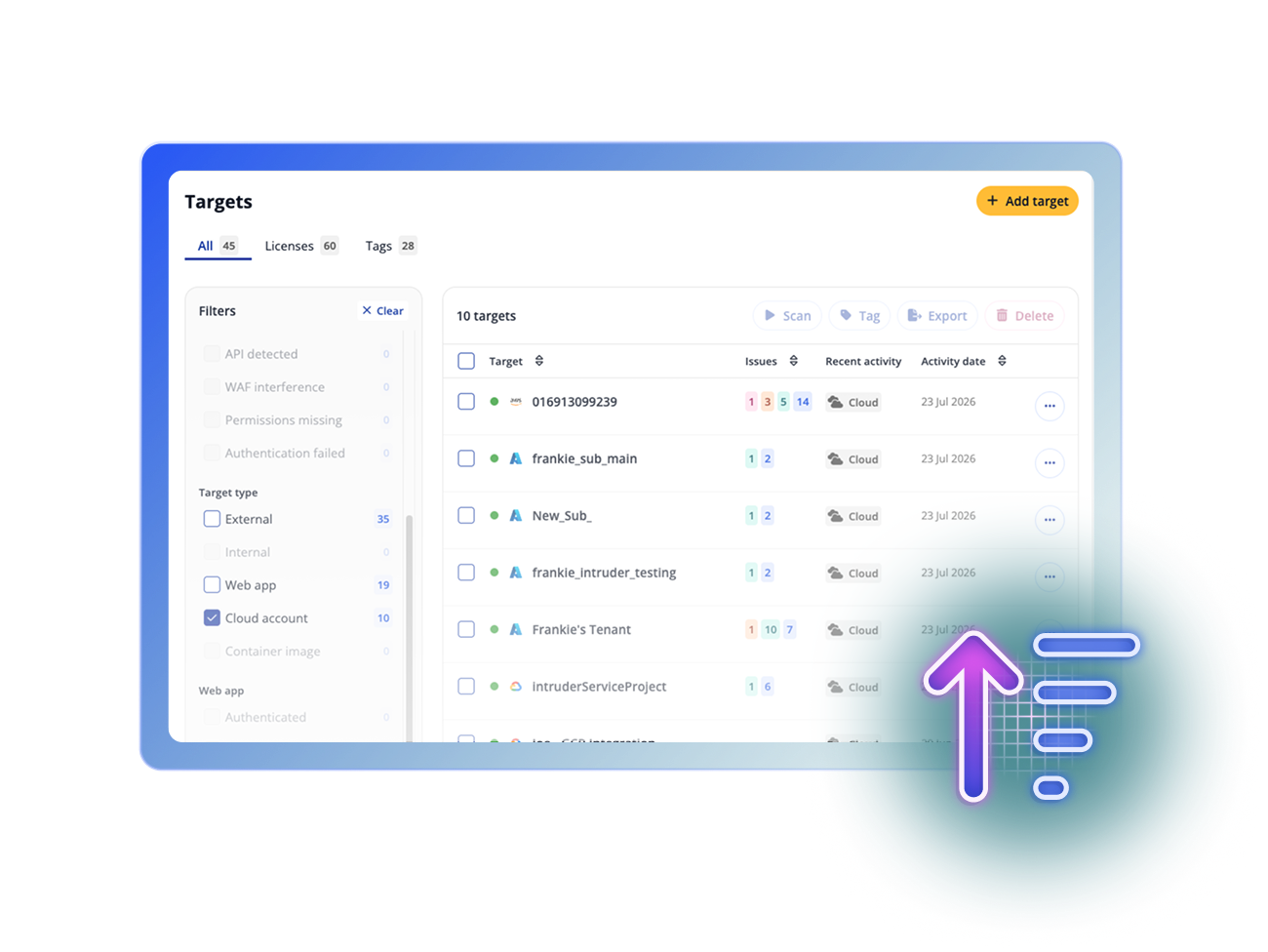
See every external target in one place: open ports, the service behind each one, and the version it’s running. Search and filter to find exposed databases, forgotten admin panels, expiring certificates, and anything else you need to remove from the internet.
Alerts when it matters
Get notified by email, Slack, or Teams when a network change is detected, including SSL/TLS certificates approaching expiry. Set custom alerts for the exposures you can't afford to miss.
Find what's exposed, fix what matters, and stay ahead of new threats

External Scanning
Infrastructure Security

Attack Surface Monitoring
Respond to changes

CSPM
Daily cloud config checks

Asset Discovery
Reveal unknown targets

DAST
Secure web apps

Risk Based Prioritization
No more alert fatigue

Cyber Hygiene Reporting
Demonstrate progress

Emerging Threat Detection
Check and act fast

Container Image Scanning
Automated image discovery

Secrets Detection
Prevent leaked credentials

Website Security
140k+ checks

API Security
Test your APIs

Compliance
SOC 2, ISO, HIPAA, DORA

Internal Scanning
Secure employee devices
Our customers love Intruder







One platform. Continuous security.
Intruder integrates with Jira, GitHub, GitLab, Azure DevOps, and ServiceNow for issue tracking, Slack and Microsoft Teams for alerts, Drata and Vanta for compliance, and Microsoft Sentinel for SIEM. See all our integrations.
An attack surface exposure is an asset or service that's internet-facing when it has no reason to be, like an admin panel with no firewall in front of it, an RDP port open to the world, or a database that shouldn't be exposed. The risk isn't always a CVE; it's the exposure itself. When a vulnerability does drop, anything unnecessarily internet-facing is immediately in the firing line. Reducing your exposure means fewer things to patch under pressure, and fewer ways in for an attacker to begin with.
Attack surface monitoring is the continuous process of tracking your internet-facing assets, like domains, IP addresses, open ports, and running services, to detect changes that could introduce new risk.
Network-level attack surface monitoring checks which ports and services are exposed and whether the exposure itself is a problem (e.g. a database port that shouldn't be public). Vulnerability scanning goes deeper, checking those exposed services for known CVEs, misconfigurations, and exploitable weaknesses. Intruder does both: continuous monitoring detects changes, and a full vulnerability scan fires automatically when something new is found.
Network scans run daily on Enterprise and weekly on Pro and Cloud plans. When a new service is detected, Intruder batches any other changes from the same two-hour window and runs a full vulnerability scan across all affected targets, so you're alerted to any issues within hours of the change being detected.